What Is the Difference Between a Handyman and a Licensed Builder in NSW?
The difference is the licence and what it allows: the minor maintenance licence many handymen hold covers non-structural maintenance and minor repairs, while a general builder’s licence covers any residential building work, structural work included.
The NSW Government’s page on minor maintenance and cleaning work defines it as non-structural maintenance, including minor repairs, or cleaning of existing buildings and structures. A separate category, minor trade work, covers new, repair or replacement work that cannot easily be assigned to a specific trade. Both are useful licences. Neither is a builder’s licence.
The categories of building and trade work page says a general builder can do any work that is residential building work, and lists carpentry, joinery, waterproofing, fencing and the roofing trades as separate licensed trades. For a property manager, the point is simple: a licence is a list of what that person may do, so check the class, not just that a number exists.
Does a handyman need a licence for small jobs?
Not for residential building or trade work worth $5,000 or less in labour and materials, but electrical, plumbing, drainage, gasfitting and air conditioning work needs a licence whatever the job is worth.
Above $5,000 including GST, the NSW licensing pages say a contractor licence is needed to carry out, advertise or contract for the work, with fines of $22,000 for an individual and $110,000 for a company for unlicensed work. Below it, the question stops being legal and becomes practical: is this person competent and insured for this particular repair?
Which Rental Repairs Should Go to a Builder Rather Than a Handyman?
Anything that holds weight, keeps people from falling or keeps water out of the structure: decks, stairs and balustrades, wall and floor framing, subfloors, rotten sills and posts, and leaking showers. These look small on a work order and often are not once the surface is opened.
The common pattern is a minor symptom with a structural cause. A few of the work orders that usually belong with a builder:
- A soft deck board or wobbly balustrade. The board is often fine; the joist or post under it is not. Our guide to whether a rotten deck is an urgent repair covers the tenancy side, and deck repairs covers the work.
- A door that has started sticking. Sometimes it is the hinges. Sometimes the frame is moving because the floor beneath it has dropped, which is a subfloor problem. See sagging floors.
- Swollen skirting next to the shower. Replacing the skirting treats the stain. The cause is usually failed waterproofing, and waterproofing is a licensed trade.
- A rotten window sill. If the rot has reached the wall frame below, the repair is framing work, not a patch.
- A leaning fence. New palings will not fix posts that have rotted at the ground.
Which jobs suit a handyman?
Non-structural maintenance: adjusting and rehanging doors where the frame is sound, replacing handles, catches and hooks, small patches, and the dozens of quick fixes a rent roll throws up.
A good handyman is valuable to any agency. The risk is not the handyman; it is a structural job being routed to one because the work order made it sound small.
Why Does It Matter to the Property Manager Who Does the Repair?
Because the landlord has to keep the property structurally sound and fit to live in for the whole tenancy, and a repair that only treats the symptom comes back as the same work order, often worse.
NSW Fair Trading’s page on minimum standards for rental properties lists being structurally sound first among the seven standards, and says the standards must be maintained throughout the tenancy. Its list of urgent repairs includes any fault or damage that makes the property unsafe or insecure, which is where a failing balustrade or stair usually lands.
The paperwork matters too. A repair done by the right licensed trade, with a scope that says what was found and what was fixed, is evidence that the landlord met their obligations. A receipt that says “fixed deck” is not much help if the same deck comes up at the next inspection, or in a dispute.

What Should a Property Manager Check Before Booking a Trade?
Check the licence class against the work, ask for the insurance certificate, and get a written scope that names the cause as well as the fix. For jobs over $5,000, the contract has to be in writing.
A short checklist that works for any trade on a rent roll:
- Licence: look up the number on the Service NSW licence check and confirm the class covers the work, for example general building or carpentry for a deck frame.
- Insurance: ask for a current public liability certificate of currency before the trade goes on site.
- Scope: a written scope that says what was found, what will be fixed and what is excluded.
- Contract: NSW Fair Trading’s guide to building contracts says work over $5,000 including GST needs a written contract, with a fuller large job contract above $20,000.
- Photos: before, during and after, especially of anything that gets covered over.
Do statutory warranties apply to rental repairs?
Yes, where the job is residential building work done under a contract: the NSW contracts guide says statutory warranties run for six years for major defects and two years for other defects from completion.
That is one more reason to have structural work done by a licensed contractor under a proper scope. The warranty is only useful if you can show what was done.
So Should You Call a Handyman or a Licensed Builder?
Call a handyman for non-structural maintenance; call a licensed builder when the job involves structure, safety or water getting into the building, or when it is worth more than $5,000 in labour and materials. If you cannot tell which it is from the work order, that is usually a sign it needs a builder to look.
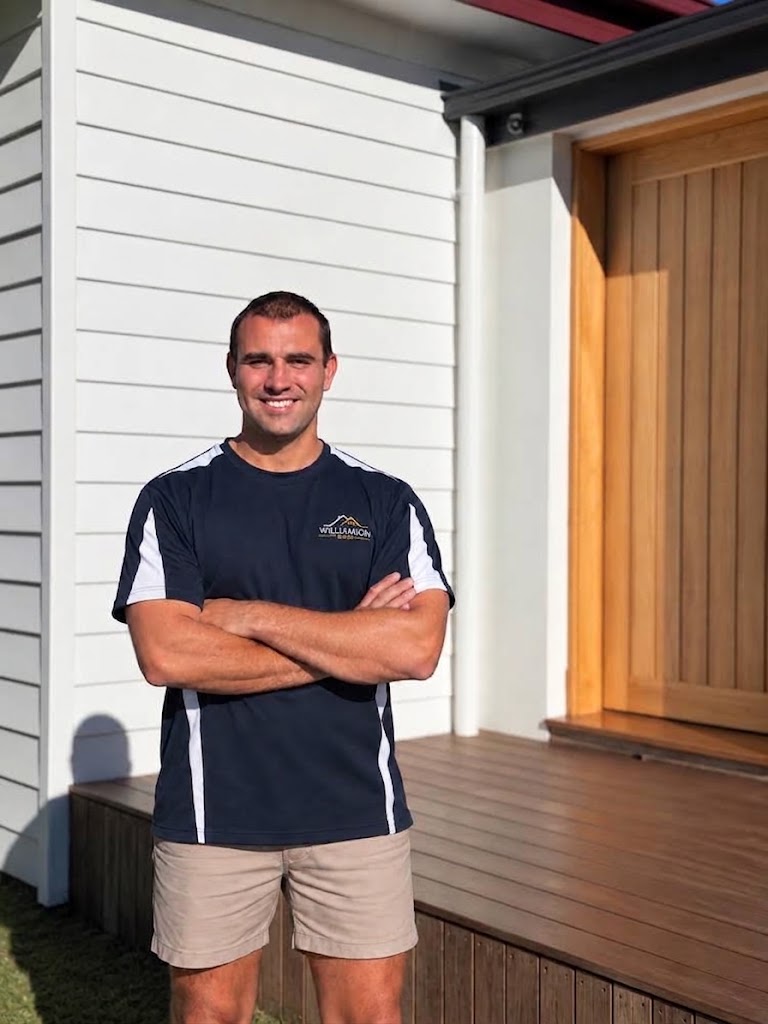
Williamson Builds is a licensed builder, not a handyman, and takes on small jobs where there is a building or carpentry repair in them: a door that has dropped, a rotten sill, a run of palings, a soft patch of floor. We do not do odd jobs with no building work in them, and we say so on the phone rather than sending a quote. Our property maintenance and home repairs page covers the range.
We work with property managers and strata managers across all of the Central Coast, with Newcastle and Sydney by arrangement for larger jobs, under builder’s licence 399743C with $10 million in public liability cover. For end-of-lease questions, see fair wear and tear vs damage. This guide is general information for NSW and is not legal advice.