Full Bathroom Renovations
Strip-out back to the frame, structural repairs, new substrate, waterproofing, tiling, fit-off and final clean, all under one scope and one price with one person to ring.

Licensed builder · 399743C
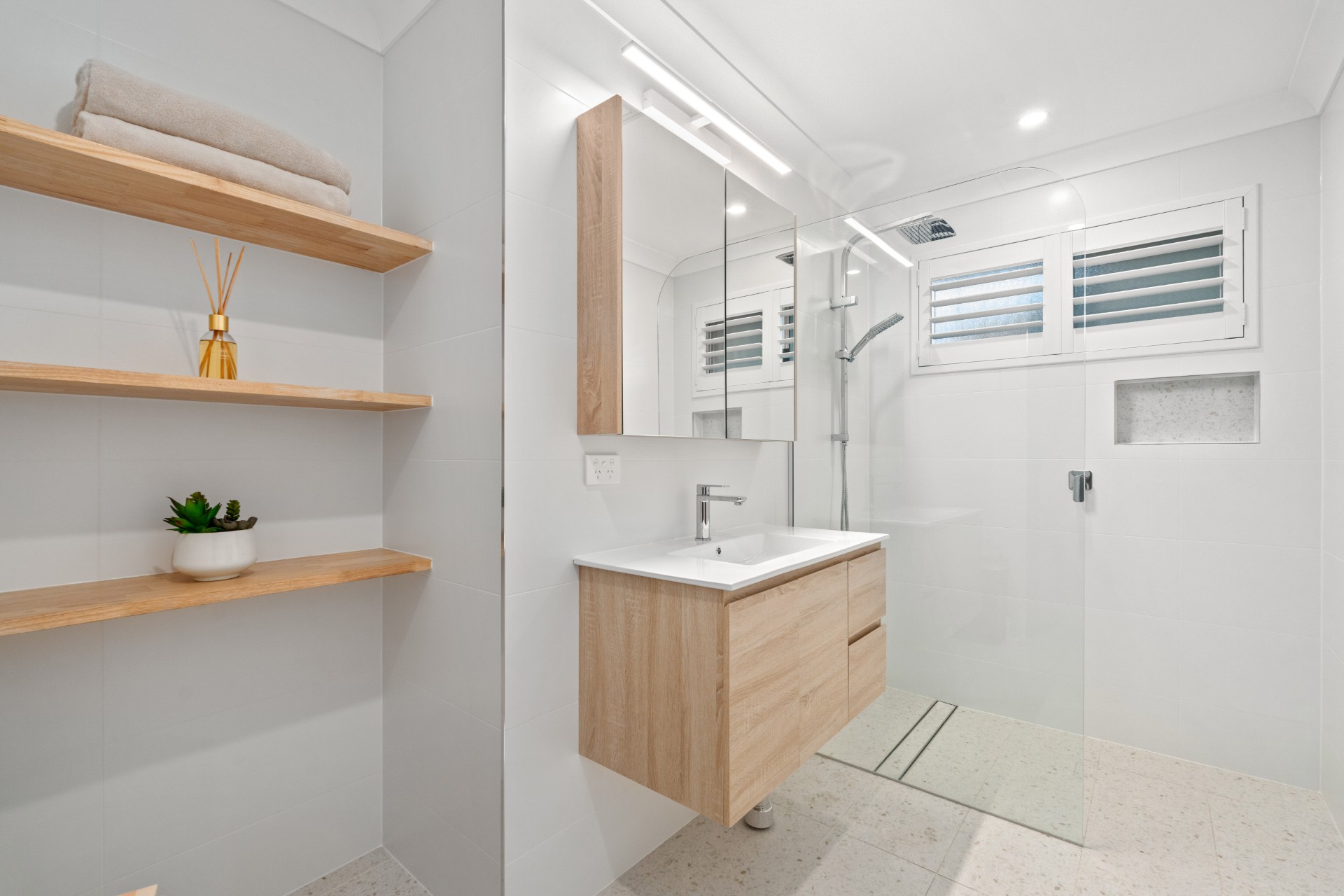
Most of what goes wrong in a bathroom renovation isn’t the tiling. It’s the floor that wasn’t level, the wall that wasn’t square, and five trades turning up in the wrong order. Williamson Builds is a licensed builder: structural work and carpentry in-house, waterproofing, tiling, plumbing and electrical by licensed trades, and one schedule with one party accountable for it.
The short answer
Williamson Builds renovates bathrooms, ensuites and laundries across the Central Coast of New South Wales under NSW builder’s licence 399743C. That covers strip-out, the structural and framing work behind the walls, waterproofing, and every trade on the job (plumbing, electrical, tiling, glazing and fit-off), sequenced and held together by the builder who quoted it.
Most bathrooms are three to four weeks on site. Whether a bathroom lasts comes down to the work you stop being able to see after week two, such as the frame, the substrate behind the tiles, the fall to the waste and the membrane. All of it is itemised in the written scope before you get a price.
What we do
We are carpenters and builders first. The tiling, plumbing and electrical are done by licensed trades we work with regularly, and we look after the structural work, the waterproofing and the schedule.
Strip-out back to the frame, structural repairs, new substrate, waterproofing, tiling, fit-off and final clean, all under one scope and one price with one person to ring.
Small, tight and usually sitting over a bedroom or a living space, so the waterproofing and the falls matter more here than anywhere else in the house.
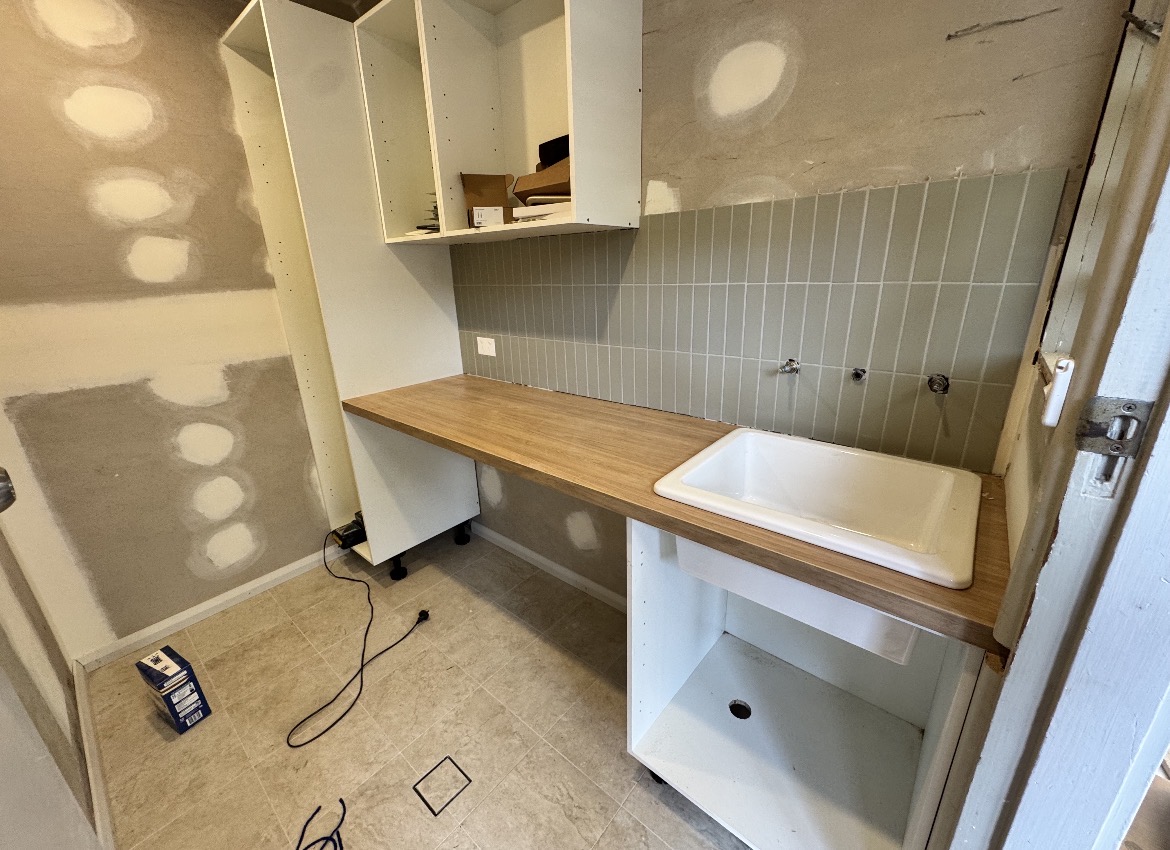
Often the same trades and the same wet-area detailing on a smaller footprint, and frequently a good one to do in the same run while the trades are already on site.
Moving or removing a wall, widening a doorway, relocating the room, or repairing floor framing that has been slowly rotting under the old bathroom. This is the licensed-builder side of the job.
Reviews
The difference
Plenty of outfits can tile a bathroom. The difference shows up in the framing, the waterproofing, and whether the same person is still answering the phone in twelve months.
The age of the house, what the floor is built on and how close you are to the water decide the structure, the ventilation and the fittings that last. The room is built to your house, not to a showroom layout.
The scope of works goes out in writing first, with demolition, structural repairs, waterproofing, tiling and every trade itemised, and the number follows. Whatever might be hidden behind an old wall is named as a provisional item before you sign.
The room comes back to the frame before the new work goes in, so rot in the floor or the wall framing is found and fixed first. If a refresh is the better spend, we will tell you that too.
Whether the work is exempt, complying development or needs a DA depends on your house and on what is being changed. We check it against your address before quoting and tell you which one applies.
Licence 399743C is a general building licence, so the structural work, the waterproofing, the plumbing, the electrical and the tiling are all coordinated by us. One number to ring, whether you live in the house or manage it.
Framing, wet-area sheeting and waterproofing all get covered by the tiles, and that is where a bathroom is either right or not. Those stages are photographed and handed over, so nothing is taken on trust.
What you stop being able to see
People judge a bathroom on the tiles, the vanity and the tapware, but those are rarely why bathrooms fail. Every item below is finished and covered up before the fittings you chose even arrive.
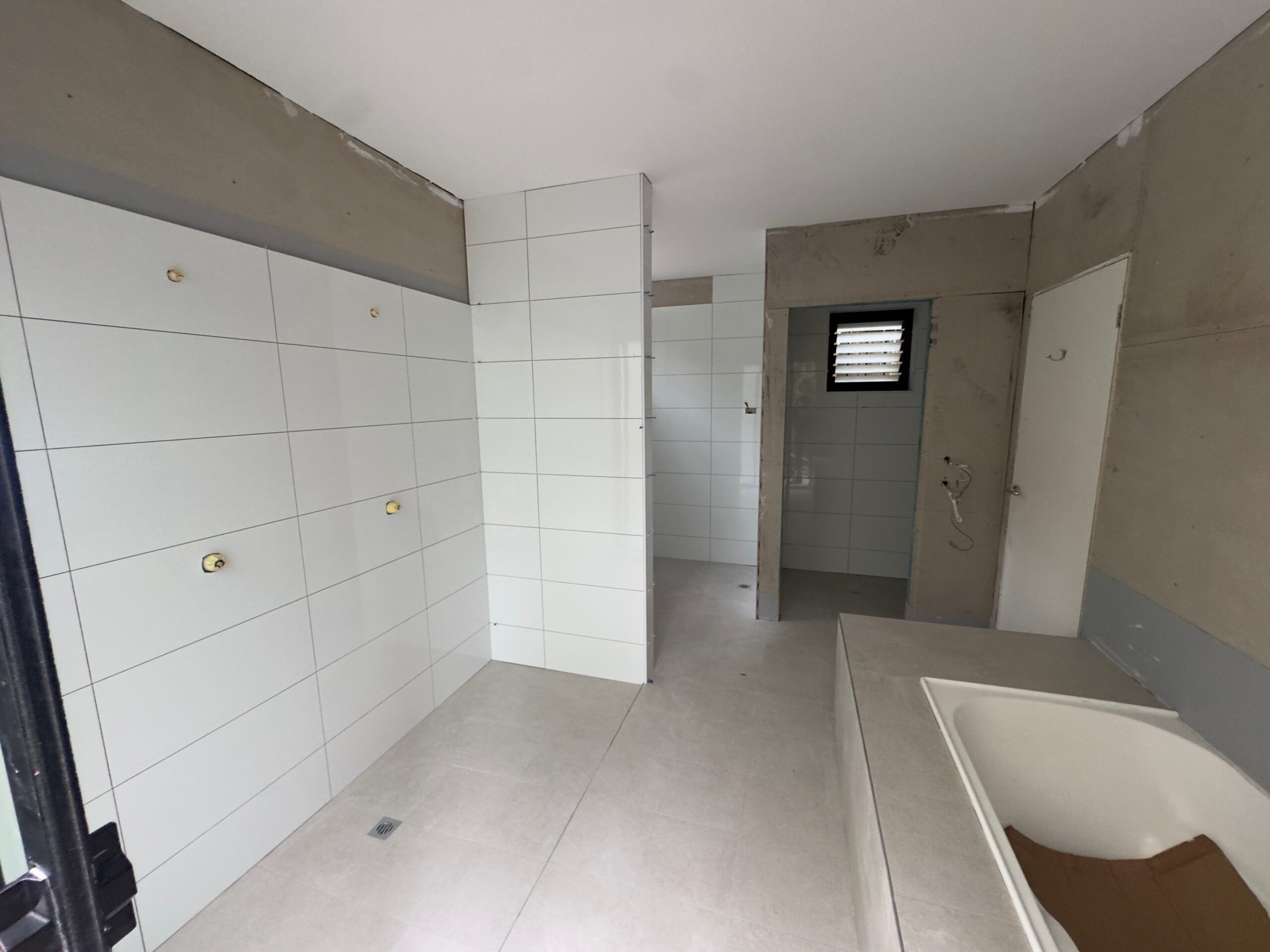
Strip-out
Everything comes out to the studs and the floor structure. It is the only point at which anyone can see what they are working with, and in a forty-year-old bathroom it is usually where the surprises turn up.
Floor frame
Old bathrooms leak slowly. Joists and bearers under a timber floor soften where water has been tracking, and tiling over a floor that is already going is the most expensive shortcut on the job, so anything failing is replaced before the new floor goes down.
Framing
Grab rails, wall-hung vanities, shower screens, niches and mirrored cabinets all have to fix into something. Blocking goes into the wall while it is open, because retrofitting a fixing into a tiled wall means cutting tiles you cannot match.
Substrate
The board behind the tiles has to be rated for a wet area. Standard plasterboard in a shower is a defect that can stay hidden for years and then take the tiles with it when it gives way.
Waterproofing
Waterproofing is a licensed trade with its own Australian Standard, and it decides whether the room below stays dry. We carry the membrane up the walls to the required height, fall the floor properly to the waste and detail the junctions rather than painting over them.
Ventilation
A fan venting into the ceiling cavity just moves the moisture from your bathroom into your roof. Ducting it to an external vent keeps the roof space dry and saves you finding a mould problem years later.
The decision
It mostly comes down to the waterproofing, and you cannot check the waterproofing without pulling the whole room apart.
Keep the existing waterproofing, floor and wall tiles. Replace the vanity, tapware, shower screen, toilet, mirror and lighting, and repaint. It costs a fraction of a renovation and takes a fraction of the time.
The tiles are sound and you can live with them, the room has never leaked, and what you dislike is the fittings rather than the layout.
Once tapware or a shower screen is removed, the membrane behind it is disturbed. There is a limit to how much you can change before a refresh has turned into a renovation with no waterproofing.
Strip to the frame, fix whatever is behind it, then new substrate and waterproofing, with a new layout if you want one. The room is rebuilt from the structure out.
The bathroom is more than fifteen or twenty years old, there is any sign of water where it should not be, or you want to change where anything sits.
This is the only option that lets anyone give you a warranty on the waterproofing, because it is the only one where we installed it.
We will tell you when a refresh is the better spend, and we would rather do that than sell you a renovation you did not need. If there is water damage, though, a refresh is a lid on the problem rather than a fix.
Hamish walks the site with you, then you get a written scope before any price. No obligation.
Local conditions
Less than for anything we build outside, since a bathroom is an indoor room. Even so, five things about the housing stock and the climate here change what we find and what it costs.
Timber floors
Post-war fibro and weatherboard homes across the older suburbs have timber floors, and a bathroom that has been leaking slowly for twenty years has been leaking into them. It is the most common thing we find at strip-out and the most common reason a quote moves if it was not allowed for.
Slab or subfloor
On a timber subfloor a floor waste can be relocated from underneath. On a slab it means cutting concrete, which is a different job with a different price. Which one you have depends on when your part of the Coast was built.
Humidity
Mould starts with warm, humid air in a bathroom that does not dry out between uses. Extraction ducted outside matters more on this coast than inland, and most of all in houses that sit closed up between visits.
Salt
Close to the beach, chrome pits and cheap tapware corrodes faster than the brochure suggests. In a beachside bathroom it pays to spend on finishes and save somewhere else.
Holiday homes
A large share of Coast bathrooms are in holiday houses and rentals, where the job has to land between bookings or before peak season. We plan the trade sequence around that from the start rather than finding out halfway through.
The first two change the price and are checked before quoting rather than after. The last one changes the schedule, so tell us about it early.
How it works
A bathroom has five trades in it, and the written scope keeps the handovers between them from becoming your problem.
Step 01
We look at the age of the room, what the floor is built on, where the waste and the stack sit, whether the walls are load bearing, and what you want changed. If there is already water damage we will usually see the signs of it before anything comes out.
Step 02
Demolition and rubbish, structural repairs, framing and blocking, substrate, waterproofing, tiling, plumbing and electrical, fit-off, ventilation and final clean, all itemised, with the exclusions listed and the PC allowances named rather than left vague.
Step 03
Trade by trade, start date to handover date in writing. The price is fixed against the scope. We cannot know in advance what is behind a forty-year-old wall, so anything hidden is called out as a provisional item up front rather than sprung on you later.
Recent work
Questions
If yours isn’t here, ring and ask. You’ll get a straight answer rather than a booking form.
Most are three to four weeks on site. The order is set by the trades: demolition, structural work, plumbing and electrical rough-in, sheeting, waterproofing and its curing time, screed, tiling, then fit-off. Waterproofing has to cure before anything goes over it, and there is no way to speed that up.
Licensed plumbers and electricians we work with regularly. We are carpenters and builders and we do not claim to hold every ticket, so be wary of anyone who says they do. We run the schedule, so the trades turn up in the right order and the handovers between them are our problem rather than yours.
Usually not for a like-for-like renovation inside the existing footprint. Removing or altering a load-bearing wall, changing the building’s structure, or anything that changes the footprint can need approval. We tell you which side of the line your job sits on before quoting rather than after.
Almost always, as long as there is another bathroom. If it is the only one in the house, going three to four weeks without it takes some planning. Some people arrange to be away for the tiling and fit-off, which is the longest continuous stretch.
On this coast, more often than not it is water damage in the floor framing, especially in houses on timber floors where the bathroom has not been touched in decades. Sometimes it is plumbing that was never quite right, and occasionally a wall that is carrying more load than anyone expected. We allow for looking, and we list anything we cannot know in advance as a provisional item before you sign.
Yes, though it is a bigger job than it sounds. The cost depends on the waste and stack locations, the floor structure and whether the walls are load bearing. On a timber subfloor it is a lot more straightforward than on a slab. We work that out at the site walk rather than quoting it blind.
We use tilers we have worked with for years rather than doing it ourselves. What we keep in-house is the structural work and the coordination, including the framing, the substrate and making sure the waterproofing is done and cured properly before anyone tiles over it.
Usually it comes down to what happens between strip-out and tiling: whether the floor framing is being repaired, whether the substrate is wet-area rated, how far the membrane goes up the walls, and whether the fan is ducted outside. None of that shows in the finished room, so it is easy to leave out. Compare the written scopes as well as the totals.
Your builder
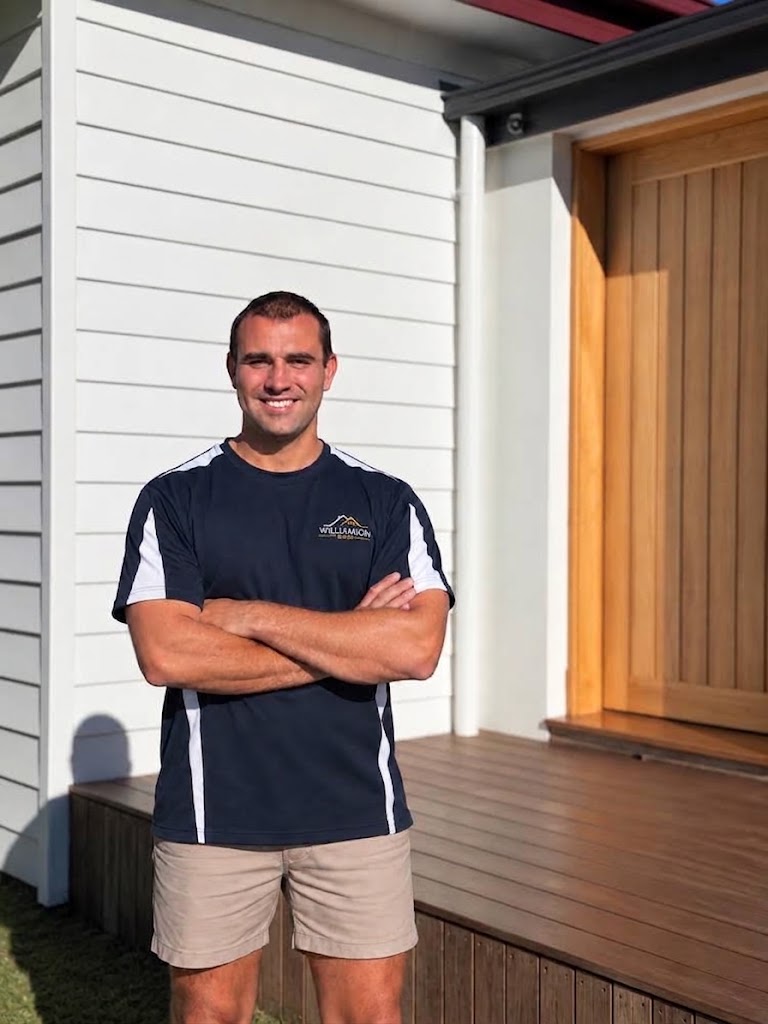
Director and licensed builder, Williamson Builds, licence 399743C
Hamish has spent more than ten years on the tools, including high-end residential work in Dee Why and Annandale before starting Williamson Builds on the Central Coast. He runs every renovation himself rather than handing it to a supervisor, and he writes and checks the technical content on this page, including what sits behind the tiles, the renovate-or-refresh call and every answer in the FAQ above.
NSW licence 399743C · Certificate III in Carpentry · Certificate IV in Building and Construction. Search the licence number on the Building Commission NSW register.
Last reviewed September 2026 · reviewed every six months
Coverage
Based on the Coast and renovating across all of it.
Start here
A couple of photos of the existing bathroom tell us most of what we need, such as how old it is, what the floor is on, and how much is changing. If someone else is better suited to the job, we’ll say so in the reply.


