What Is the Difference Between a Timber and an Aluminium Pergola?
A timber pergola is framed on site to the space, while an aluminium pergola is usually a manufactured system with set spans, parts and its own warranty. One is built to the house. The other is installed to the kit.
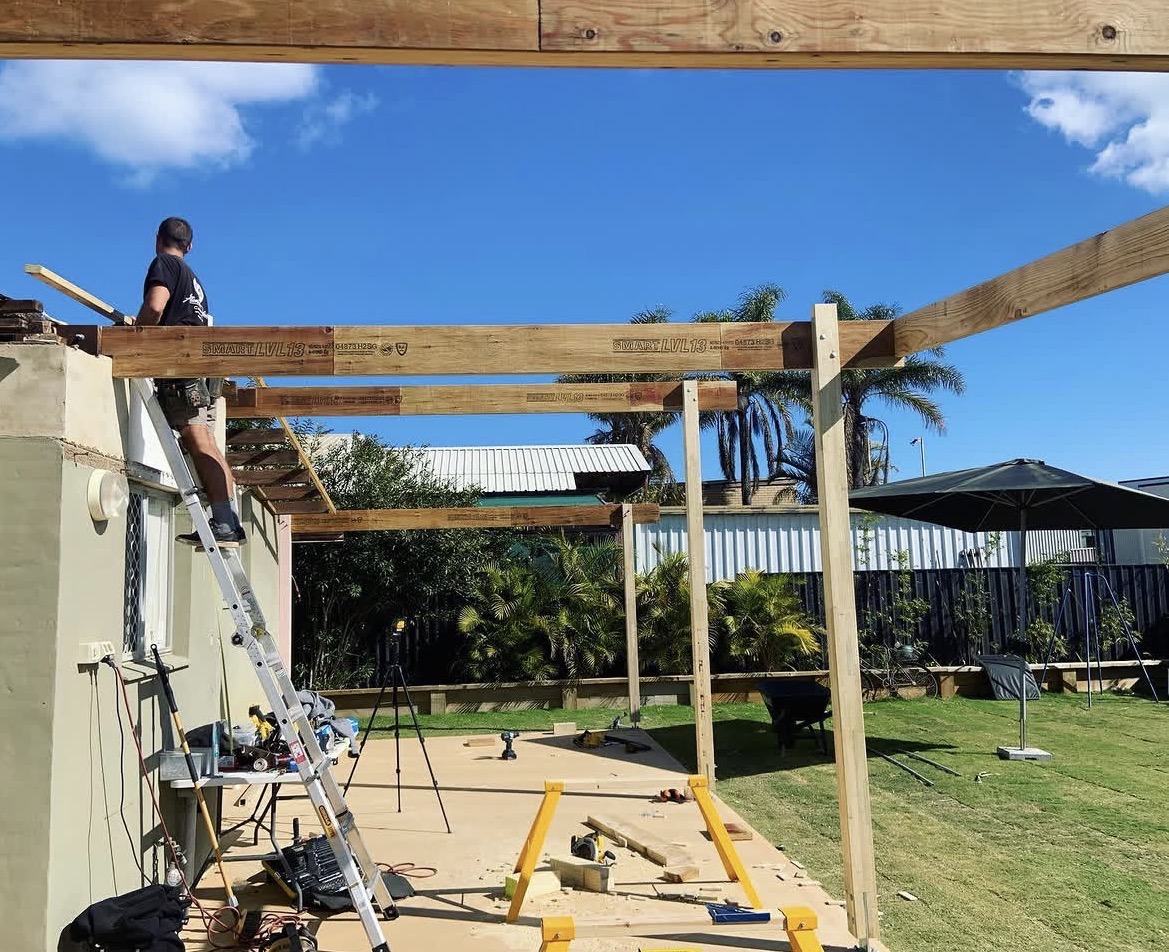
A timber pergola starts with the block: where the posts can land, how far the beams need to span, and how it ties back into the house frame. The frame is cut and fixed on site, so it can follow an old roofline that is out of level, line up with a fascia, or clear a window that sits in the wrong place for a standard span.
An aluminium pergola, including the popular opening louvre roofs, comes from a manufacturer as a system. Spans, post sizes and colours come from the range, and the warranty depends on the maker’s installation and care rules being followed. Many metal pergola kits sold as aluminium are actually pre-painted steel, so check which you are being quoted, because the care rules differ.
- Timber suits: attaching to an older house, odd shapes and spans, matching existing timber work, and anyone who wants to paint or stain it later.
- Aluminium suits: operable louvres, a slim modern profile, and blocks where council rules call for non-combustible materials.
- Either way: footings, tie-downs and the connection to the house matter more than the material on top.
Which Pergola Lasts Longer Near the Beach?
Close to the surf, a well-detailed hardwood pergola usually outlasts a metal one, because salt attacks coatings and fixings faster than it attacks durable timber. Further inland, the gap closes.
The Galvanizers Association of Australia’s corrosivity guide, based on the Australian Standards, rates land within 200 m of rough seas and surf beaches as C5, very high. From 200 m to 1 km inland from surf it is C4, and from 1 km to 10 km inland along ocean fronts with breaking surf it is C3. A lot of Central Coast homes sit in those bands, from Patonga to Norah Head.
Coating makers draw the same lines. Dulux’s Alumi-Shield warranty page says marine and coastal environments are exposed to winds and sea salts that have a long-term impact on coating systems, and lists some of its powder coat finishes as suitable only for environments more than 100 m from the high tide line. Its warranties also depend on the surface being maintained to its care guidelines.
Timber does not corrode, but it does rot if the wrong species is used or water is left sitting on it. WoodSolutions’ timber durability guide rates Class 1 hardwoods such as spotted gum, ironbark, tallowwood and merbau at more than 40 years above ground, based on good detailing and average exposure. It sets treated pine for above-ground exposed use at hazard class H3 and in-ground use, including pergola posts, at H4.
What actually fails first on a coastal pergola?
The fixings, almost every time.
Brackets, bolts and screws rust long before a good frame gives up, and on a pergola they are what stop the wind lifting it. WoodSolutions warns that some timber preservatives are corrosive to zinc-plated steel and recommends hot-dip galvanised or 304 or 316 stainless fixings for treated timber. Near the surf, stainless is the safer choice, which is the same rule our materials page sets for every job near the salt.
Which Pergola Needs Less Maintenance?
Neither is maintenance-free: timber needs its finish and joints looked after, and metal needs washing, more often near the sea.
WoodSolutions puts the upkeep of a Class 1 hardwood at a minimum, with joints and sealants checked every three to five years, and treated pine at a recoat every two to three years. A stained hardwood pergola left to grey off will still stand up. It just changes colour.
Metal frames rely on their coating. Dulux’s powder coating advice says powder coated surfaces should generally be cleaned every twelve months, and more often in coastal regions. Breezway, which makes aluminium louvre systems, says on its care and warranty page that regular maintenance is a condition of its warranty and recommends cleaning aluminium every three months, or more often in aggressive coastal environments. For pre-painted steel, Colorbond’s maintenance advice is to hose down areas the rain does not wash at least every six months, and more often where marine salt spray is common. The underside of a pergola roof is exactly that kind of area.
Does the Material Change Whether a Pergola Needs Council Approval?
It can. Under the NSW exempt development rules, metal parts must be low reflective and factory pre-coloured, and on bush fire prone land a pergola within 5 m of the house must be non-combustible.
The NSW Planning Portal’s page on exempt balconies, decks, patios and pergolas sets the other limits, including no more than 25 m² in area, no more than 3 m high at its highest point, and at least 900 mm from the lot boundary in most residential zones. All of it must be structurally adequate and comply with the Building Code of Australia. If a timber pergola sits close to the house on bush fire prone land, it will not be exempt and needs another approval path.
Much of the Central Coast is bush fire prone. The NSW Rural Fire Service says the type of construction required depends on the property’s Bush Fire Attack Level, and that most houses are lost to ember attack. On a high-risk block, that can tip the choice towards metal before looks or upkeep come into it. Our guide to council approval for a deck or pergola covers the full set of rules on the Central Coast.
So Should You Build a Timber or an Aluminium Pergola?
Build in hardwood if you are close to the surf, attaching to an older house or need a span that does not fit a kit, and choose aluminium if you want operable louvres or the block calls for non-combustible materials.
The material is the visible decision. The ones that decide how long a pergola lasts are hidden: footings sized for the wind trying to lift it, posts held clear of the ground on stirrups, fixings that suit the salt, and a connection to the house that lands on the frame. A kit built well beats a timber pergola built badly, and the reverse is just as true.
Williamson Builds designs and builds timber pergolas, attached and freestanding, across all of the Central Coast under builder’s licence 399743C, with Newcastle and Sydney by arrangement for larger jobs. If what you really want is a solid roof and a room outside, our patios and outdoor rooms page covers that instead.