What Is the Difference Between a Roof Restoration and a Roof Replacement?
A restoration keeps the existing tiles or sheets and repairs everything that has worn around them; a replacement strips the covering off and puts a new one on, usually with new battens or sarking where the old ones have failed.
On a tiled roof, a restoration usually means cleaning, replacing cracked or broken tiles, re-bedding and re-pointing the ridge capping, fixing flashings and valleys, and often a coating. On a metal roof it means replacing corroded screws, treating surface rust, resealing flashings and penetrations, and sometimes painting. Either way the covering itself stays.
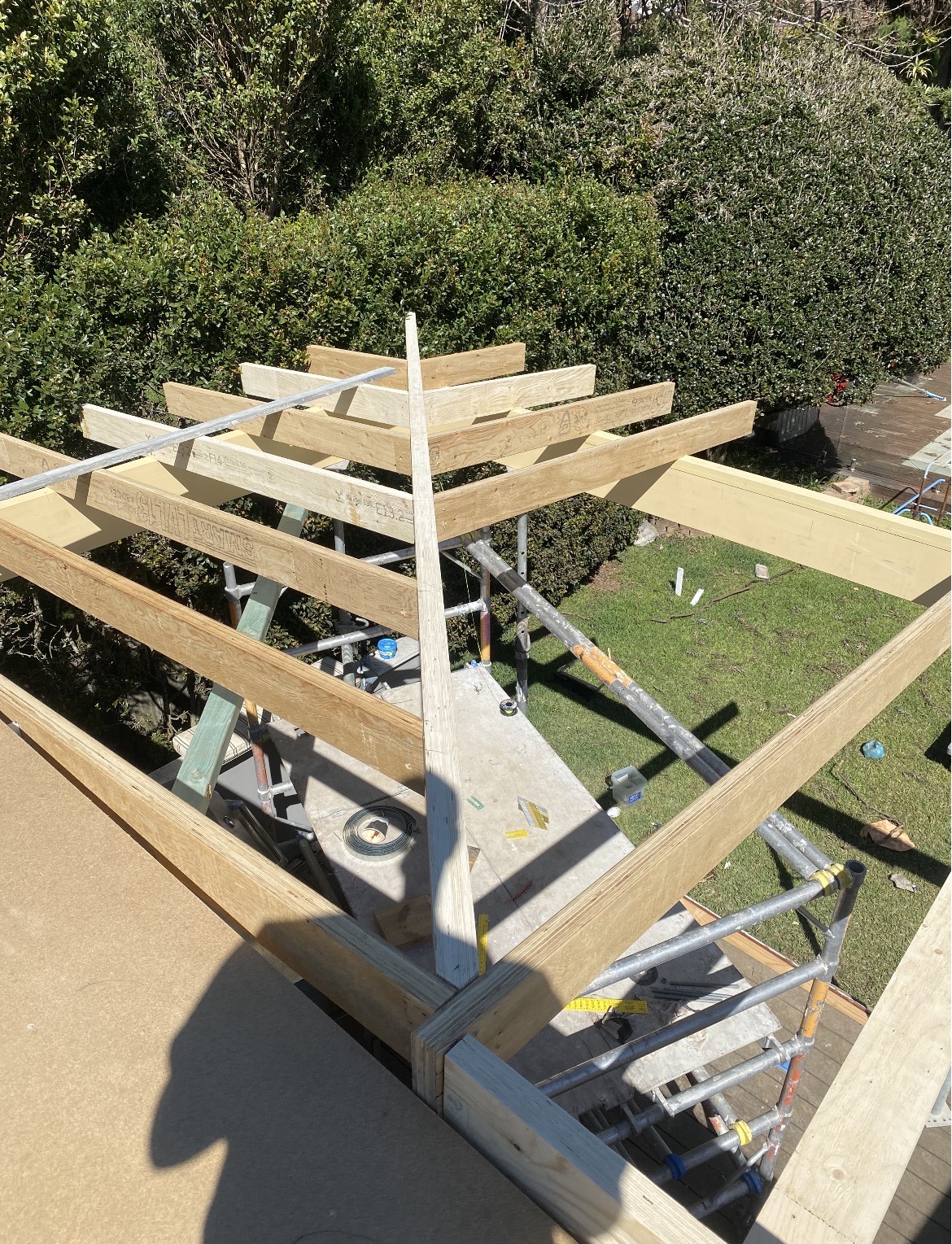
A replacement starts from the battens. Once the old covering is off, the timber underneath is exposed, and that is the only time you get to see the whole roof frame from above. Rotten battens, split rafters and a fascia that has been soaking up water from a blocked gutter all show up then.
That timber is the part most people forget. Fascias, barge boards, battens and the ends of rafters are carpentry, and they are where water does its damage first when a roof has been leaking quietly for years.
How Do You Tell if a Roof Needs Replacing Rather Than Restoring?
A roof needs replacing when the covering itself has failed across the roof, or when the timber holding it up has, rather than when the surface looks tired. A faded roof with sound tiles is a restoration; a rusted-through one is not.
These are the signs that usually point past a restoration:
- Metal sheets with rust that has gone right through, not just surface spotting, especially along laps and around fixings.
- Tiles cracking or crumbling across large areas of the roof, not just a few near the ridge or where someone has walked.
- Battens that are rotten, sagging or pulling away, so the covering no longer sits flat.
- Sarking under the tiles that has torn or perished, letting wind-driven rain into the roof space.
- Leaks in several places that come back after each repair.
- A roof line that dips between rafters when you look along it from the street.
Does living near the beach change the answer?
Yes. Salt speeds up corrosion of steel roofs and their fixings, so a coastal roof often reaches the end of its life sooner, and a replacement has to use a grade of steel made for that exposure.
BlueScope’s guide to specifying for marine environments recommends COLORBOND Ultra steel for roofing in severe marine areas, typically 100 to 200 metres from breaking surf, and SUPERDURA Stainless steel within 100 metres. Standard COLORBOND steel is recommended more than 200 metres from breaking surf. On Central Coast streets close to the beach, that choice decides how long the new roof lasts. Fixings need the same thought, which is why the materials we use include stainless steel on coastal jobs.
Could Your Roof Contain Asbestos, and Does That Change Things?
Yes. If an older roof might be asbestos cement, it must never be pressure cleaned or blasted with compressed air, and removal needs a licensed asbestos removalist. Restoration methods that suit tiles or steel can turn an asbestos roof into a contamination problem.
SafeWork NSW’s safety alert on pressure cleaning asbestos roofs describes a contractor whose high-pressure cleaning of an asbestos roof caused widespread contamination and forced neighbours out of their homes during the clean-up. The alert also warns that asbestos roofs are brittle and easy to fall through.
If you are not sure what your roof is made of, have it identified before anyone quotes to clean, coat or walk on it. That step costs little time and decides the whole approach.
Who Can Restore or Replace a Roof in NSW?
Roof plumbing and roof tiling are licensed trades in NSW, so work worth more than $5,000 in labour and materials must be done or contracted by someone licensed for it. The carpentry underneath, such as battens, fascias and rafters, is building work.
The NSW Government’s roof plumbing work page defines roof plumbing as fixing, installing, renovating, repairing and maintaining gutters, downpipes, flashings and roof coverings, including protective coatings that do not change the structure. It excludes coverings made of non-metallic tiles and slates, concrete and timber, which fall under other trades. The categories of building and trade work page lists roof plumbing, roof slating and roof tiling as separate licensed trades, and says a general builder can do any residential building work.
For anything over $5,000 including GST, NSW Fair Trading’s guide to building contracts says the contractor must give you a written contract. On a roof job that should name who is doing each part, what happens if rotten timber is found once the covering is off, and how that extra work is priced before it is done.
So Should You Restore or Replace Your Roof?
Restore the roof when the tiles or sheets and the frame under them are sound and the problems are on the surface; replace it when the covering has failed across the roof or the battens and timber beneath have. The answer comes from the roof space and the battens, not the colour of the roof.
Before choosing, get someone to look inside the roof space with a torch after rain. Water marks on the sarking or the timber show where the roof is letting water in, and soft or stained battens tell you a coating will not fix it. For a landlord, NSW lists a serious roof leak among the urgent repairs in rental properties, and our guide to the rental minimum standards covers the wider repair duty.
Williamson Builds repairs the timber side of roofs across all of the Central Coast, with Newcastle and Sydney by arrangement for larger jobs, under builder’s licence 399743C with $10 million in public liability cover. Our property maintenance and home repairs page covers the leaks, rot and storm damage that usually come with a tired roof, and rental property repairs covers the same work for landlords. This guide is general information for NSW.