
What is the difference between a carpenter and a builder?
A carpenter is a trade. A builder is a licence. In NSW, the difference that matters when you hire is what the licence says, not what’s written on the ute.
Carpenters train through a Certificate III and spend their working lives cutting and fixing timber: frames, floors, stairs, doors, decks. A builder holds a general building licence, which takes a Certificate IV in Building and Construction (or a building degree) and at least two years of wide building experience. Plenty of builders started as carpenters, and many still work on the tools.
That leaves “carpenter” covering three different people. One holds a carpentry contractor licence. One is a qualified carpenter working under somebody else’s licence. The third has no licence at all and sticks to small jobs. All three can honestly call themselves carpenters. Only the first can quote you directly for anything over $5,000.
Does a carpenter need a licence in NSW?
Yes, for any job worth more than $5,000 in labour and materials, including GST.
The NSW Government says a licence is needed to “carry out, advertise or contract for” building or trade work above that figure. The licence has to be in the right category, though, and that is where a lot of online advice goes wrong. You’ll read that anything over $5,000 needs a builder’s licence. It doesn’t. For timber work, a carpentry licence does the job. Electrical, plumbing, drainage, gasfitting and air conditioning are different again: they need their own licence “regardless of its cost”.
What can a licensed carpenter do?
More than most people expect: decks, pergolas, framing, stairs, windows, doors, floors and cladding are all carpentry.
The State defines carpentry as cutting and placing timber on site “to put up framing or fix components or assemblies”, and its list of carpentry work runs wider than the name suggests:
- timber and metal framing
- stairs, windows, doors and floors
- exterior cladding that isn’t brick, and internal timber lining
- concrete footings for outdoor structures such as pergolas and timber decks
- pergolas, gazebos and other non-habitable outdoor shelters
- skylights, awnings and timber retaining walls that don’t need approval
What it leaves out is just as useful to know. A carpentry licence doesn’t cover plasterboard, concrete paths and slabs, or anything built in brick or stone.
Can a carpenter build a deck in NSW?
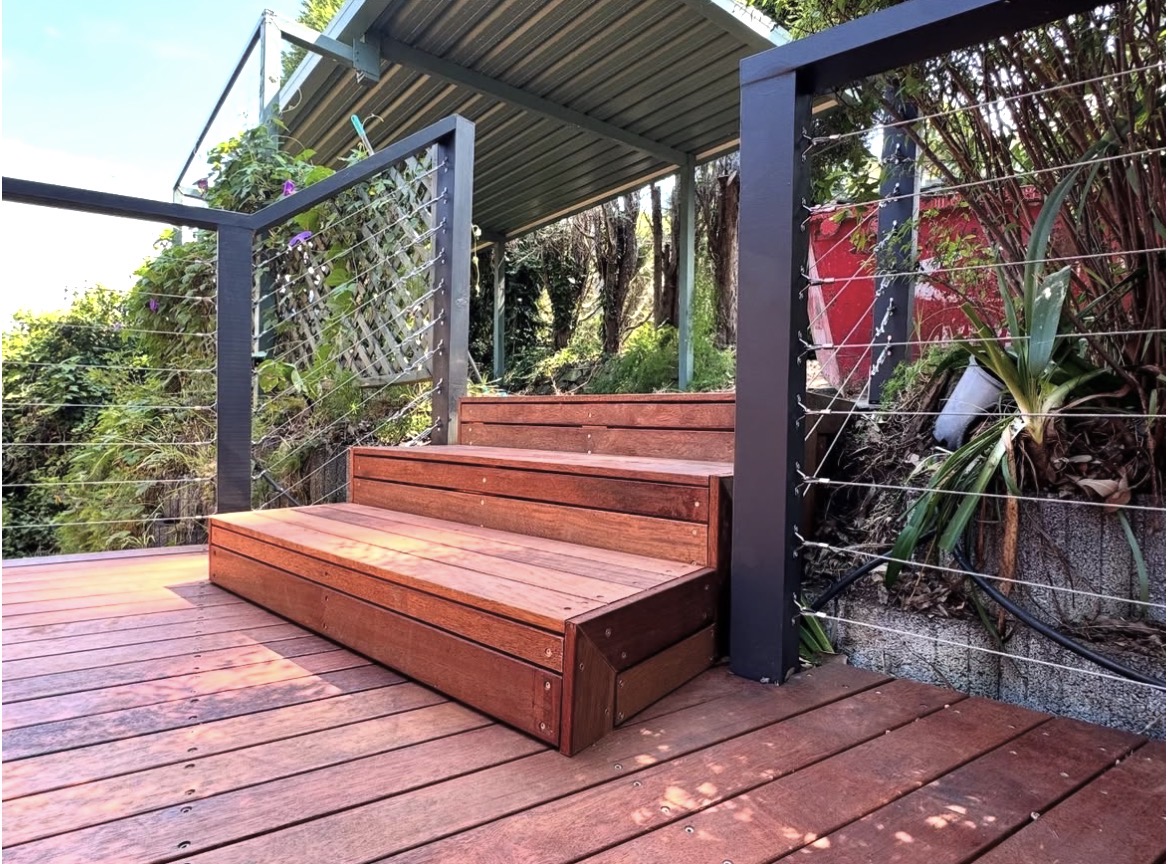
Yes. A licensed carpenter can build a timber deck or a pergola, footings included.
Decks and pergolas are some of the most common carpentry jobs there are, and a good licensed carpenter will do them well. The licence doesn’t settle whether the deck needs approval, though. That comes down to height, size and where it sits on the block, and it’s the same question whoever builds it. Our deck builds and pergolas start with that check before anything is priced.
When do you need a builder instead of a carpenter?
When the job changes the house instead of adding timber to it, or when it needs other trades to finish. A general builder, in the State’s own words, “can do any work that is residential building work”. A carpenter can’t, and these are the jobs where the gap shows:
- Extensions and new rooms. General building work covers “constructing, altering, or adding to a dwelling”.
- Garages, carports and sheds. The carpentry category leaves them out, and general building work names them.
- Kitchen, bathroom and laundry renovations. They sit outside carpentry. A builder can do them, and so can a contractor with the separate kitchen, bathroom and laundry licence.
- Anything load-bearing. That separate renovation licence stops short of work affecting a load-bearing part of the house, so walls coming out are builder territory.
- Jobs with more than one trade in them. Someone has to hold the schedule and the contract when the plumber, electrician and tiler all have to show up in the right order.
Can a carpenter do a bathroom or kitchen renovation?
Not on a carpentry licence alone. Contracting for a renovation takes a builder’s licence or the kitchen, bathroom and laundry licence.
Even under that renovation licence, the plumbing and electrical “must be subcontracted” to trades licensed for that work. A bathroom renovation is mostly plumbing, waterproofing, tiling and electrical work, and the carpentry is a small share of it. The person you contract with needs a licence that covers the whole job.
Is taking out a wall a job for a carpenter or a builder?
A builder’s. The carpenter frames the opening, but the job around it is building work.
Once a wall is load-bearing, the beam over the new opening usually needs an engineer’s design, and the change usually needs a complying development certificate or a DA. That means a principal certifier, who has to be appointed before the work starts and who inspects it along the way. The framing itself is carpentry. Getting the approval, the engineering and the trades lined up is a builder’s job, which is why opening up a kitchen is one we run from start to finish.
Carpenter or builder: which do you need for common jobs?
Timber work that stands on its own is a carpenter’s job. Anything that changes rooms, structure or trades is a builder’s. Here is how the usual jobs fall under NSW licence categories:
- New deck or deck repair: licensed carpenter or builder
- Pergola: licensed carpenter or builder
- Stairs, doors, windows or timber floors: licensed carpenter
- Replacing weatherboard cladding: licensed carpenter
- Garage, carport or shed: builder, not a carpentry licence
- Kitchen or bathroom renovation: builder, or a kitchen, bathroom and laundry licence if nothing load-bearing is touched
- Removing a wall: builder
- Extension or second storey: builder
- Any plumbing, electrical or gas: a licensed specialist trade, whoever runs the job
Under $5,000, NSW doesn’t require a licence for non-specialist work. That keeps small jobs cheap and quick to book. It also means nobody has checked whether the person replacing your rotted bearer knows how to size one. For carpentry repairs on anything that holds weight, ask for the licence number anyway.
Do the contract and insurance rules differ for a carpenter and a builder?
No. The rules follow the price of the job, not the title of the person doing it.
Over $10,000, you should get a written contract with the contractor’s licence number on it. Over $20,000, the State insurance regulator says “building businesses and trades businesses (tradies)” contracting with a homeowner must buy home building compensation cover, and give you the certificate “before they ask for or take any payment for the work (including a deposit)”. A carpenter quoting $25,000 for a deck owes you that certificate as much as a builder does. The rest of what NSW law gives you on a renovation, including deposits and warranties, applies either way.
How do you check what a licence covers?
Look up the name or number on the NSW Government’s licence check and read the categories as well as the status.
The public licence record shows the holder’s name, licence number, the categories of work it covers and the expiry date. It also lists any conditions, cancellations, suspensions and public warnings. A current licence that says “carpentry” is perfect for a deck and wrong for an extension. The record tells you which one you’re looking at.
So who should you call?
Call a licensed carpenter for timber work that stands on its own, and a builder when the job touches the structure of the house or needs other trades. For new stairs, a deck repair or a pergola, a good licensed carpenter is all you need, and often the cheaper option. For a renovation, an extension or a wall coming out, you want a builder holding the contract, the approval and the schedule. For odd jobs with no timber in them, a handyman is the better call.
Hamish Williamson is both. He trained as a carpenter, holds a Certificate IV in Building and Construction, and Williamson Builds works under a general building licence, number 399743C. The carpentry is done in-house and the licensed trades come in under the same contract. If your job only needs a carpenter, he’ll tell you, and he’ll quote it as one.